



Home Inspections
Mold Testing
Water Testing
5 Things a Home Inspection Can’t Tell You Without Additional Testing

Pat Leroux
A home inspection can tell you a tremendous amount about a property.
A professional inspector evaluates visible and accessible systems and components and documents observed conditions. That can include roofing, electrical, plumbing, heating, cooling, structural components and many other areas of the home.
But a home inspection is still a visual, non-invasive evaluation.
And some questions cannot be answered by looking.
That is why certain environmental conditions and property systems require separate testing or specialized inspections.
1. Whether Radon Is Present
Radon has no color, smell or taste. That means an inspector cannot walk into a basement, look around and determine whether the home has an elevated radon level. The way to learn more is to test.
Radon occurs naturally as uranium in soil, rock and water breaks down. The gas can move through the soil and enter homes through cracks and other openings in the foundation. It is not limited to old homes or homes with basements.
Professional radon testing gives buyers, sellers and homeowners measurement data rather than assumptions.
2. Whether a Suspected Substance Is Mold
Sometimes discoloration on a wall or ceiling looks suspicious. That does not automatically mean anyone can identify it as mold simply by looking at it. Likewise, the absence of an obvious dark patch does not establish that mold is absent.
If there is a reason for concern—such as previous water damage, a plumbing leak, moisture intrusion or visible suspicious material—sampling can provide more information. 1st Step offers air sampling and surface sampling, with samples submitted for laboratory analysis when appropriate.
Observation identifies a reason to investigate. Testing provides additional evidence.
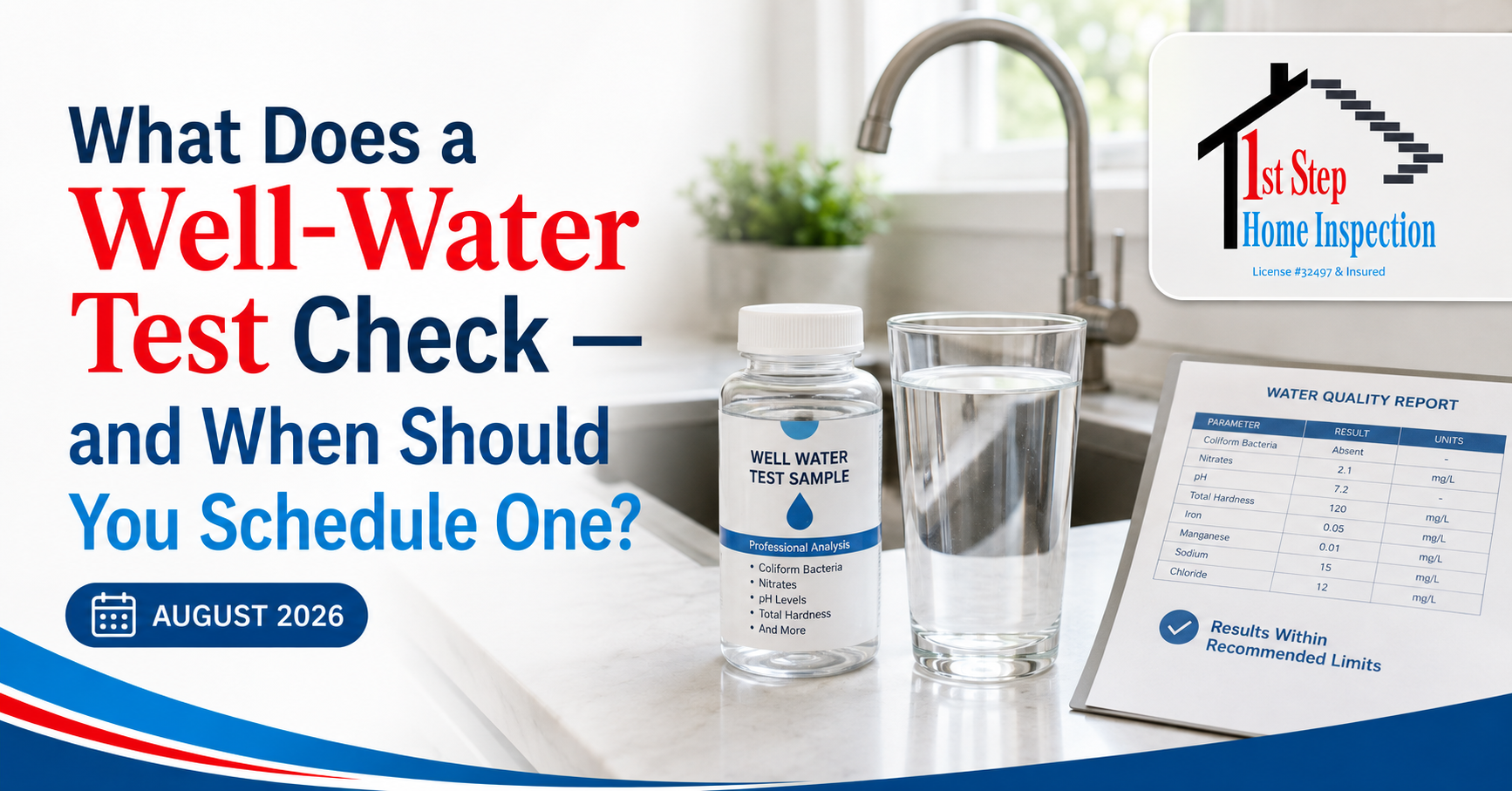
3. Whether Your Well Water Should Be Evaluated
Clear water is not a laboratory result. Water that looks, smells and tastes normal can still warrant testing.
For homes using a private well, laboratory testing provides information that cannot be determined visually. 1st Step offers well-water sampling for multiple water-quality characteristics and contaminants.
Testing can be useful during a real-estate transaction and for existing homeowners when there has been flooding, a change in taste or odor, work on the well, or another change affecting the water source.
4. Whether Wood-Destroying Insects Are Affecting the Property
Damage from termites, carpenter ants and wood-destroying beetles can become expensive. A dedicated WDI inspection focuses specifically on accessible evidence of wood-destroying insect activity and damage.
Accessible wood structures, moisture-prone areas, decks, porches, crawlspaces and other areas may deserve focused attention. A WDI inspection can be useful during a home purchase, but homeowners may also want one when they notice suspicious damage, debris, moisture conditions or insect activity.
5. How a Septic System Is Performing
A home inspection and a septic inspection are not the same thing. A dedicated septic evaluation may involve locating and accessing the system, reviewing accessible components and evaluating conditions associated with the tank and drain field.
Because portions of a septic system are underground, access can become part of the process. Depending on the property, a septic company may need to locate the system, uncover components, pump the tank or perform additional site-specific work before the evaluation can be completed.
Starting that process early in a real-estate transaction can help reduce last-minute surprises.
Inspection and Testing Work Together
The point is not that home inspections are incomplete. They perform a different job.
A home inspection helps you understand observable property conditions at a particular point in time. Environmental testing and specialized ancillary inspections answer different questions.
When you are buying, selling or maintaining a property, the goal should not be to collect as many tests as possible. The better question is: What information do I need to make a better decision about this property?
That is where an experienced inspector can help.
Need Testing?
1st Step Home Inspection provides home inspection and ancillary testing services throughout Maryland. If you have questions about radon, mold, well water, WDI, septic testing or another property concern, call (410) 245-7654 or visit https://1stephi.com.
